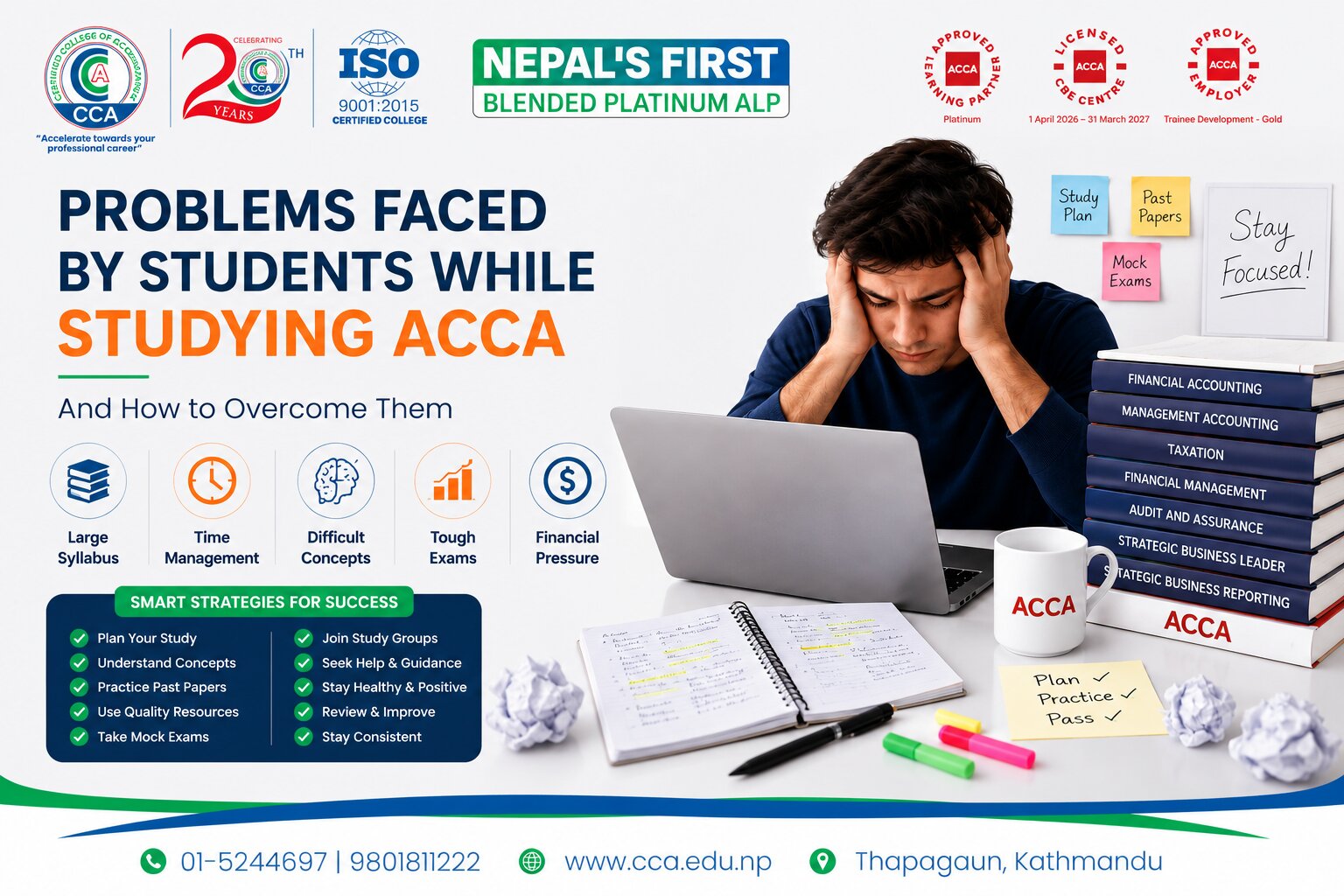
Studying ACCA is a rewarding step toward a global career in accounting and finance, but it also comes with several challenges. The qualification covers a broad syllabus, tests practical application rather than memorization, and requires consistent preparation across multiple exam sessions.
Many students struggle with managing their time, understanding technical concepts, balancing studies with work or university, and staying motivated throughout the journey. For students in Nepal, the cost of ACCA can be an added challenge because official ACCA registration and exam fees are paid in British Pounds (GBP), making exchange rate fluctuations an important factor.
The good news is that these challenges are common and can be overcome with the right study plan, quality learning resources, and regular practice. In this article, we’ll discuss the problems faced by students while studying ACCA, why they occur, and practical ways to overcome them.
Common Problems Faced by Students While Studying ACCA
Almost every ACCA student experiences challenges during their studies. Whether you’re starting after +2, studying alongside university, or working full-time, understanding these common challenges while studying ACCA can help you prepare better and avoid common mistakes.
1. Managing a Large Study Syllabus
One of the biggest problems faced by students while studying ACCA is the extensive syllabus. ACCA covers accounting, taxation, auditing, financial management, business, and strategic topics, making it difficult to complete everything without proper planning.
Many students feel overwhelmed because they try to study too much at once or leave revision until the last minute.
How to overcome it:
- Break the syllabus into weekly study goals.
- Focus on one topic at a time.
- Revise regularly instead of only before exams.
2. Time Management Difficulties
Balancing ACCA with university, work, or personal commitments is another common challenge. Without a study schedule, students often fall behind and rush their preparation before exams.
Consistency is more important than studying for long hours occasionally.
How to overcome it:
- Create a realistic weekly study timetable.
- Study for maximum hours daily if possible.
- Set achievable weekly targets.
3. Difficulty Understanding Technical Concepts
Many ACCA subjects require a strong understanding of accounting standards, taxation, auditing, and financial management. Students from non-commerce backgrounds or those starting after +2 often find these topics challenging.
Since ACCA exams test practical application, memorizing notes alone isn’t enough.
How to overcome it:
- Focus on understanding concepts instead of memorizing.
- Learn through examples and practice questions.
- Ask tutors whenever a topic isn’t clear.
4. Passing Professional-Level Exams
Strategic Professional papers are often the most challenging because they test analysis, professional judgment, and real-world business scenarios rather than simple theory. This is reflected in ACCA’s global pass rates, which are generally lower at this level.
Many students lose marks due to poor exam technique instead of a lack of knowledge.
How to overcome it:
- Practice past papers under timed conditions.
- Improve answer-writing and time management.
- Learn how ACCA examiners expect answers to be structured.
5. Language and Communication Barriers
Although ACCA exams are conducted in English, not every student has the same level of language proficiency. Students who are not confident in English may understand the concepts but struggle to interpret questions or express their answers clearly.
This can affect exam performance, especially in subjects that require written explanations, such as Strategic Business Reporting (SBR) and Strategic Business Leader (SBL).
How to overcome it:
- Improve your accounting and business vocabulary.
- Read examiner reports and model answers.
- Practice writing short, clear responses in English.
6. Lack of Proper Study Planning
Many students begin studying without a clear plan. They spend too much time on easier topics, ignore difficult areas, or postpone revision until the exam is near. This often leads to incomplete preparation and unnecessary stress.
How to overcome it:
- Create a monthly and weekly study plan.
- Allocate more time to challenging subjects.
- Include regular revision and question practice in your schedule.
Financial Challenges During ACCA (Especially in Nepal)
One of the biggest concerns for Nepali students is the overall cost of studying ACCA. Official registration, annual subscription, and exam fees are charged in British Pounds (GBP). As the value of the British Pound changes, the amount students pay in Nepalese Rupees also changes.
In addition to ACCA fees, students also need to budget for tuition, study materials, and exam preparation resources.
Ways to manage the cost:
- Plan your finances before registering.
- Avoid exam resits through consistent preparation.
- Register for exams before the standard deadline to reduce additional charges.
- Choose a quality tuition provider that helps improve first-time pass rates.
Challenges While Studying ACCA for Different Types of Students
Students After +2
Students who start ACCA after +2 often have limited accounting knowledge and may take time to adapt to professional-level learning. However, starting early also gives them more time to build a strong foundation.
University Students
Managing university classes, assignments, and ACCA exams at the same time can be challenging. Without proper planning, students may struggle to give equal attention to both.
Working Professionals
Working professionals often face the biggest time management challenge. Long working hours and family responsibilities leave limited study time, making consistency and a realistic study schedule essential.
How to Overcome ACCA Study Challenges
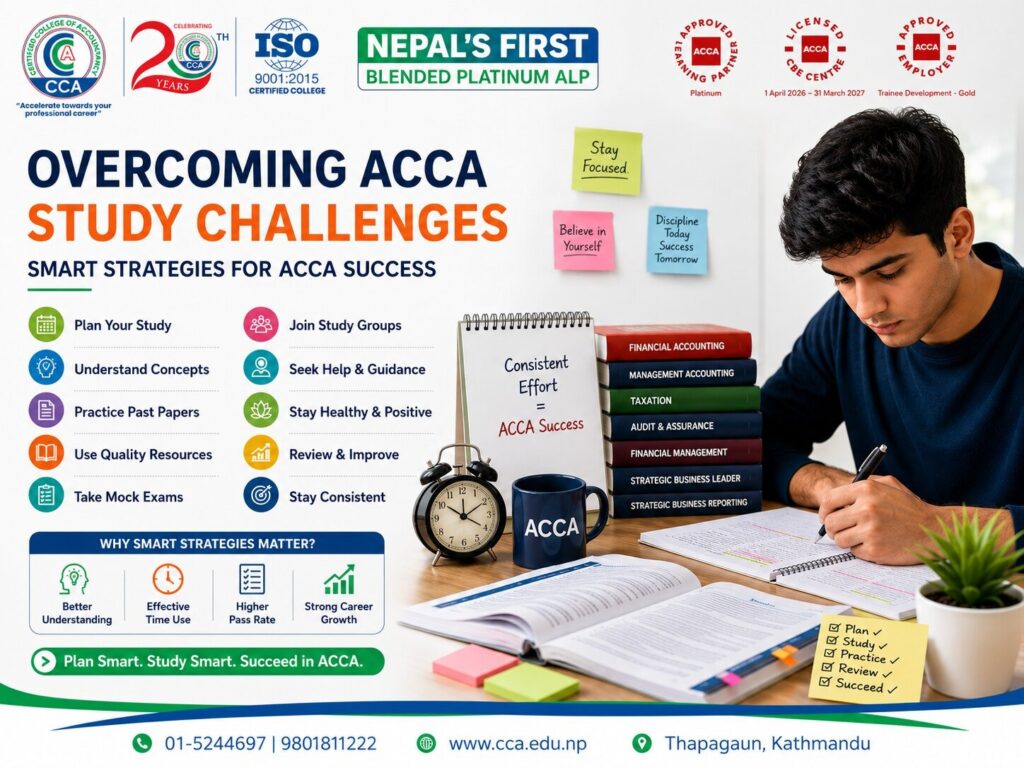
Overcoming ACCA challenges doesn’t require studying all day—it requires studying smart and staying consistent. The following strategies can help improve your understanding, confidence, and exam performance.
- Create a Realistic Study Schedule
Plan your study time around your daily routine. Set weekly goals and dedicate fixed hours for learning, revision, and question practice. A realistic schedule is easier to follow than an overly ambitious one.
- Focus on Conceptual Understanding
Avoid memorizing notes without understanding the logic behind them. ACCA exams test your ability to apply concepts in practical business situations, so focus on learning the “why” behind each topic.
- Practice Past Papers Regularly
Past papers help you understand the exam pattern, improve time management, and identify common question types. Regular practice also builds confidence before the actual exam.
- Use Approved Learning Resources
Study from trusted resources such as ACCA-approved textbooks, practice kits, and official study materials. High-quality resources provide accurate content and exam-focused practice.
- Take Mock Exams
Attempt full-length mock exams under timed conditions. This helps you improve speed, manage exam pressure, and identify areas that need more revision.
- Join Study Groups
Studying with others can make difficult topics easier to understand. Group discussions also expose you to different problem-solving approaches and keep you motivated.
- Seek Help from Tutors
If you’re stuck on a topic, don’t wait until the exam is near. Ask tutors or mentors for guidance so you can clear your doubts early and avoid building knowledge gaps.
- Stay Consistent
Success in ACCA comes from regular study, not last-minute preparation. Even a few focused hours each day are more effective than cramming everything just before the exam.
Mistakes That Make ACCA More Difficult
Many students make simple mistakes that reduce their chances of passing. Avoiding these can make your ACCA journey much smoother.
- Studying without a clear plan.
- Relying on memorization instead of understanding concepts.
- Ignoring past papers and mock exams.
- Leaving revision until the last few weeks.
- Skipping difficult topics.
- Not reviewing examiner feedback and common mistakes.
- Missing classes or avoiding help when concepts are unclear.
- Trying to study too many papers at once without proper preparation.
By avoiding these mistakes and following a structured study approach, you’ll be better prepared to handle the challenges of ACCA and improve your chances of passing each exam on the first attempt.
Conclusion
The problems faced by students while studying ACCA are real, but they are not impossible to overcome. Challenges such as a large syllabus, time management, technical subjects, professional-level exams, and financial pressure are common among ACCA students worldwide.
The key to success is staying consistent, following a structured study plan, practicing past papers regularly, and seeking guidance whenever needed. Remember that ACCA is a professional qualification that rewards understanding and discipline rather than last-minute memorization.
With the right mindset, quality learning resources, and continuous effort, you can overcome these challenges and successfully achieve your ACCA qualification.
FAQs: Challenges While Studying ACCA
Why do students fail ACCA exams?
The most common reasons include poor time management, lack of revision, weak conceptual understanding, limited past paper practice, and ineffective exam techniques.
How many hours should I study for ACCA each day?
Most students benefit from 2–3 focused hours of study per day. During exam preparation, you may need additional revision and practice depending on the paper and your experience.
Can I study ACCA while working full-time?
Yes. Many students successfully complete ACCA while working full-time by following a realistic study schedule and studying consistently each week.
How can I stay motivated during ACCA?
Set small study goals, track your progress, celebrate completed papers, join study groups, and remember your long-term career objectives.
Which ACCA papers are considered the most challenging?
Many students find Strategic Business Reporting (SBR), Advanced Financial Management (AFM), Advanced Audit and Assurance (AAA), and Strategic Business Leader (SBL) among the most challenging because they require analytical thinking and real-world application.
Is coaching necessary to pass ACCA?
Coaching is not mandatory, but it can help students understand difficult concepts, stay on track with their studies, and receive expert guidance, especially for technical and professional-level papers.
What is the best way to prepare for ACCA exams?
The most effective approach is to understand concepts thoroughly, follow a study plan, practice past papers and mock exams regularly, review weak areas, and use ACCA-approved learning resources consistently.