Choosing a professional accounting qualification is a major career decision, especially for students in Nepal who want both local career opportunities and the option to work internationally. The Advantages of ACCA in Nepal include global recognition, broad career options, practical skills, flexibility and opportunities to work across different sectors.
However, ACCA also has some limitations. Students need to consider the cost of fees charged in pounds, the difficulty of professional-level examinations and Nepal’s local regulatory requirements for audit practice.
So, is ACCA worth it in Nepal? For many students, it can be a strong career choice—but its value depends on your career goals, financial planning and willingness to gain practical experience.
What Is ACCA?
ACCA stands for the Association of Chartered Certified Accountants, a global professional accountancy body founded in 1904. ACCA says its community includes members and future members across around 180 countries, and its qualification is designed to develop technical accounting knowledge, professional skills, ethical judgement and business understanding.
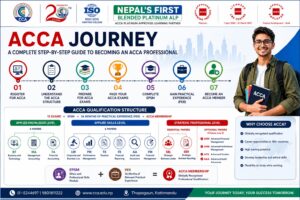
The ACCA qualification combines examinations, the Ethics and Professional Skills Module and relevant practical experience. To become an ACCA member, students must complete the qualification requirements, including 36 months of relevant practical experience and nine performance objectives.
This combination makes ACCA more than an examination-based qualification. It is designed to prepare students for accounting, finance, audit, advisory and other business-related careers.
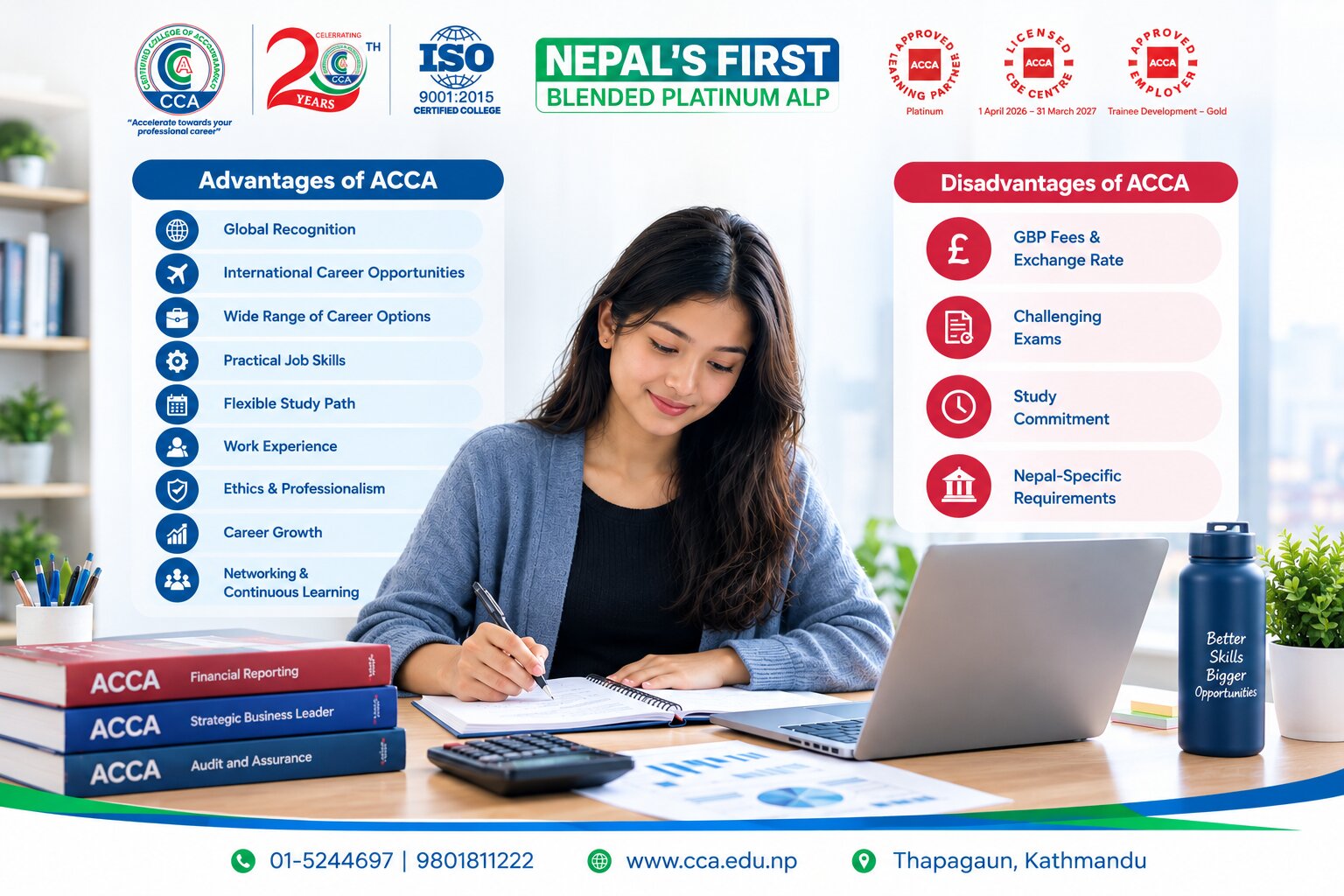
Advantages of ACCA in Nepal
1. Global Recognition and International Career Opportunities
One of the biggest advantages of ACCA in Nepal is its international focus.
ACCA is a globally established professional accountancy qualification, with its members and future members spread across a large number of countries. ACCA states that its qualification is respected internationally and can open opportunities across different markets.
For Nepali students who may want to work in countries such as the UK, Australia, the Middle East or other international markets, this global orientation can be valuable. However, students should still check the licensing, immigration and local professional requirements of the country where they plan to work.
2. Wide Range of Career Opportunities
ACCA does not limit graduates to traditional accounting jobs.
Depending on their experience and skills, ACCA professionals can build careers in areas such as:
- Financial accounting
- Management accounting
- Audit and assurance
- Taxation
- Financial analysis
- Corporate finance
- Risk and compliance
- Business advisory
- Consulting
ACCA highlights opportunities across corporate, public practice, financial services, public sector and other industries.
This flexibility is useful for students who want to move into different finance or business roles as their careers develop.
3. Strong Demand in Multinational and International Organisations
International and multinational organisations often need finance professionals who understand accounting, reporting, financial controls, compliance and business decision-making.
ACCA says employers value its professionals for their technical knowledge, strategic thinking, ethical standards and business skills.
For Nepali ACCA professionals, this can be particularly relevant when applying to multinational companies, international development organisations, shared-service businesses, professional firms and companies working with international clients.
The qualification does not guarantee employment, but its international orientation can make it a relevant credential for globally connected organisations.
4. Develops Practical and Job-Relevant Skills
Another important advantage is ACCA’s focus on skills that go beyond accounting theory.
The Ethics and Professional Skills Module is designed to develop areas such as communication, commercial awareness, leadership, teamwork, analysis, evaluation, problem-solving and professional judgement.
The Practical Experience Requirement also allows students to connect their studies with real accounting and finance work. Relevant experience can be gained before, during or after completing the examinations.
This combination of technical knowledge and workplace skills can improve a student’s readiness for employment.
5. Flexible Study and Career Path
ACCA offers flexibility in how students progress through the qualification.
Students can plan their exams around their academic or professional commitments, while practical experience can be accumulated alongside their studies. ACCA currently runs four examination sessions each year for session-based exams.
This can be especially useful for students in Nepal who want to study while completing a bachelor’s degree, internship or job.
6. ACCA Can Be Combined With Work Experience
ACCA is particularly useful when students do not treat the qualification as something that exists separately from their career.
The PER requires 36 months of relevant experience, and ACCA allows relevant experience to be gained before, during or after exams.
Starting relevant work early can help students develop practical accounting knowledge, build a CV and understand how finance works in real organisations.
7. Strong Focus on Ethics and Professionalism
Ethics is an important part of the ACCA qualification.
The Ethics and Professional Skills Module is specifically designed to develop ethical behaviour and professional capabilities through realistic business situations.
This matters because accountants handle financial information, reporting, controls and business decisions where professional judgement and integrity are essential.
8. Career Growth and Higher-Level Finance Roles
ACCA is not only aimed at entry-level accounting work. The Strategic Professional level is designed to prepare students for more senior responsibilities and leadership roles.
With relevant experience, ACCA professionals can progress towards positions such as finance manager, financial controller, senior auditor, finance business partner, financial analyst, consultant or other senior finance roles.
Career progression still depends on experience, performance, skills and the employer—not simply on holding the qualification.
9. Professional Networking and Continuous Learning
ACCA membership can also provide access to a broader professional community, career resources, insights and continuing professional development.
ACCA highlights global networking and continuous learning as part of its member benefits.
For Nepali professionals, this can help when developing an international professional network or keeping up with changes in accounting, technology, regulation and finance.
Disadvantages of ACCA in Nepal
ACCA has several advantages, but students should also understand the disadvantages of ACCA in Nepal before enrolling.
1. Exchange Rates Can Affect the Total Cost
One of the practical disadvantages for Nepali students is that several ACCA fees are charged in pounds sterling.
For example, ACCA’s Nepal fee page lists registration and annual subscription fees in GBP, along with separate examination and exemption fees. Therefore, the amount students pay in Nepali rupees can change with exchange-rate movements.
Students should therefore create a realistic budget covering registration, subscriptions, exams, exemptions where applicable, tuition and study materials.
2. ACCA Alone Does Not Give Statutory Audit Signing Authority in Nepal
This is an important distinction for anyone planning a career in public audit in Nepal.
Holding the ACCA qualification by itself does not automatically give a person statutory audit-signing authority in Nepal. Nepal’s audit and professional practice framework is regulated locally, with ICAN playing the central regulatory role. Nepal’s company law also sets requirements relating to auditors and the signing of audit reports.
However, ACCA holders can explore the applicable ICAN membership pathway and CA Membership Examination requirements. ICAN currently publishes information relating to CA Membership Examination for ACCAs.
Therefore, students who specifically want to establish an audit practice and sign statutory audit reports in Nepal should understand the additional local requirements rather than assuming ACCA membership alone provides that authority.
3. ACCA Exams Can Be Challenging
ACCA is a professional qualification, so the exams require consistent preparation and a good understanding of accounting, finance, audit, taxation and business concepts.
The Strategic Professional level, in particular, is designed around advanced technical, strategic, ethical and professional skills.
Students who study irregularly or rely only on memorisation may struggle. Success usually requires a structured study plan, question practice, revision and proper guidance.
ACCA Advantages vs Disadvantages in Nepal
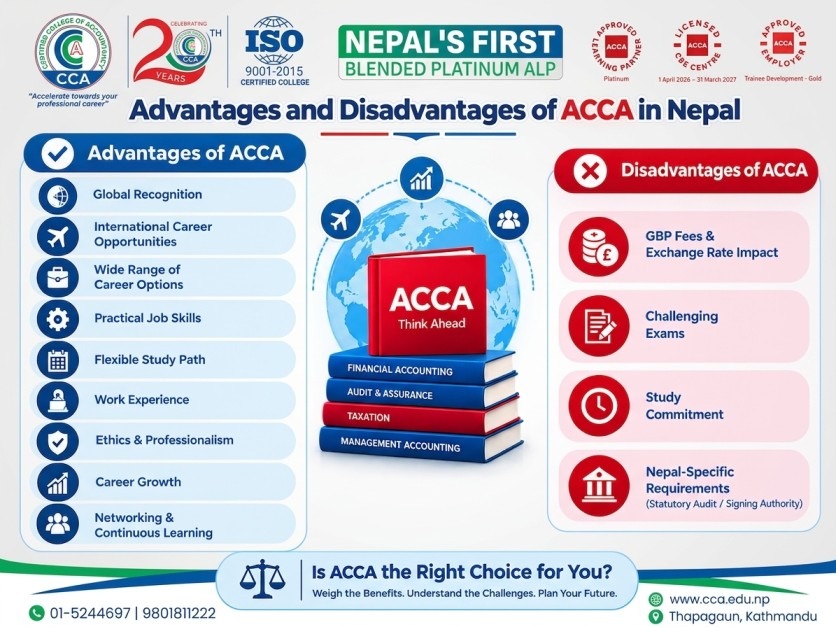
| Advantages | Disadvantages |
| Globally recognised qualification | Fees are linked to GBP and exchange rates |
| Wide range of career options | Professional exams can be challenging |
| Useful for multinational and international careers | ACCA alone does not provide statutory audit-signing authority in Nepal |
| Develops technical and professional skills | Requires significant time and commitment |
| Practical experience is part of the qualification | Total cost increases with repeated exams or longer completion time |
| Flexible study and exam progression | Career outcomes still depend on skills and experience |
| Strong focus on ethics and professionalism | Students targeting local audit practice need to understand ICAN requirements |
Is ACCA Worth It in Nepal?
For many students, ACCA is worth considering in Nepal, particularly when the goal is to build a career in accounting, finance, audit, consulting, financial services or multinational organisations.
Its strongest advantages are its international orientation, broad career scope, practical experience requirement and focus on professional skills.
However, ACCA is not automatically the best choice for everyone. A student who specifically wants a traditional statutory audit-practice route in Nepal should compare ACCA with the local CA pathway and understand the requirements for professional practice.
ACCA Is Worth Considering If You:
- Want an internationally recognised accounting qualification
- Are interested in working for multinational or internationally connected organisations
- Want flexibility to study alongside work or other education
- Are prepared to gain relevant practical experience
- Want career options beyond traditional bookkeeping and accounting
- Are comfortable with a demanding professional qualification
How to Get the Most Benefits From ACCA in Nepal
Choose the Right ACCA Learning Provider
The learning environment can make a significant difference to exam preparation and overall progress.
Students should consider factors such as teaching quality, academic support, exam preparation, practical guidance and access to learning resources when selecting an ACCA college.
CCA is an ACCA Platinum Approved Learning Partner with ISO Certificated, the highest level within ACCA’s Approved Learning Partner programme. CCA also operates an ACCA Computer-Based Exam centre and is recognised by ACCA as an Approved Employer for trainee development.
For students in Kathmandu, choosing a structured learning environment can help make the ACCA journey more manageable.
Build Additional Job Skills
ACCA gives you a strong professional foundation, but students should also develop practical workplace skills.
Useful areas include:
- Excel and financial modelling
- Accounting software
- Data analysis
- Business communication
- Presentation skills
- Problem-solving
- Digital finance skills
These complementary skills can make your CV stronger and help you perform better in real workplaces.
Plan Your ACCA Budget
Before starting ACCA, calculate more than just tuition fees.
Consider ACCA registration, annual subscriptions, exam fees, possible exemption fees, tuition, learning materials, transport and other study expenses. Because several ACCA charges are denominated in pounds, exchange-rate changes can affect the final cost in Nepalese rupees.
A planned budget can reduce financial pressure during your studies.
Conclusion – Is ACCA a Good Career Choice in Nepal?
The advantages of ACCA in Nepal make it an attractive option for students who want broad career opportunities, international exposure and a qualification that combines accounting knowledge with professional and practical skills.
At the same time, students should understand its disadvantages, particularly the cost implications of GBP-based fees, the challenging examinations and the fact that ACCA alone does not provide statutory audit-signing authority in Nepal.
Ultimately, ACCA can be a strong career choice when it matches your goals. The best results come when students combine the qualification with practical experience, additional job skills, careful financial planning and the right learning support.
Frequently Asked Questions About Advantages and Disadvantages of ACCA in Nepal
1. What are the benefits of ACCA to employers?
The benefits of ACCA to employers include access to professionals who have developed technical accounting knowledge alongside ethical, analytical and professional skills.
ACCA states that employers value its members for qualities including financial expertise, strategic thinking and ethical integrity. Its Approved Employer programme also focuses on staff training and development.
2. Does ACCA guarantee a high salary in Nepal?
No. ACCA does not guarantee a high salary. Earnings depend on factors such as experience, job role, employer, industry, skills and performance.
The qualification can support career progression and access to more specialised roles, but salary growth usually comes from combining the qualification with strong practical experience and relevant skills.
3. Can ACCA students get jobs in Nepal?
Yes. ACCA students can apply for entry-level and developing roles in accounting and finance, depending on their education, skills and experience.
Relevant opportunities may include accounting, audit support, finance operations, financial analysis and other finance-related roles. ACCA’s career guidance also highlights the wide range of sectors and roles available to accountancy professionals.
4. Is ACCA difficult for Nepali students?
ACCA can be challenging, but difficulty varies by student.
Students need consistent preparation, conceptual understanding, practice and time management. The professional-level exams require more advanced analytical and strategic skills, so a disciplined study approach and appropriate academic support can make the journey easier.