
Completing ACCA gives students a strong foundation in accounting, finance and business. However, employers generally look beyond examination knowledge. They also expect ACCA graduates to apply financial knowledge, analyse information, communicate clearly, use technology and demonstrate professional judgment.
ACCA’s Ethics and Professional Skills Module specifically covers areas such as communication, commercial awareness, leadership and teamwork, data analytics, ethics and professional effectiveness.
What Do Employers Look For in ACCA Graduates?
Employers can look for a combination of technical knowledge, analytical ability, digital skills and professional behaviour. The exact requirements vary according to the job, industry and level of experience.
Financial Analysis and Data Interpretation Skills
ACCA graduates should be able to understand financial information and use it to support business decisions. This includes:
- Analysing financial statements
- Understanding financial ratios and trends
- Identifying unusual results or variances
- Interpreting financial data
- Evaluating evidence
- Turning financial information into useful insights
ACCA notes that analytical ability is not simply about working with data; employers increasingly value the ability to interpret information, challenge assumptions and support sound decisions.
Business and Commercial Awareness
Employers also value graduates who understand how financial information relates to the wider business.
This includes understanding:
- Revenue and costs
- Profitability
- Business risks
- Business processes
- Industry conditions
- How financial decisions affect business performance
ACCA’s professional skills framework includes commercial awareness and evaluating business information from different sources.
Problem-Solving and Decision-Making Skills
Finance professionals often need to investigate problems rather than simply record numbers. Employers may expect graduates to identify the cause of a financial issue, evaluate available information and suggest practical solutions.
Communication Skills ACCA Graduates Need in the Workplace
Accounting and finance professionals regularly communicate with managers, colleagues, clients and other stakeholders. ACCA includes communication and interpersonal skills as part of its professional skills development.
Verbal Communication
ACCA graduates should be able to explain financial information clearly, participate in meetings, discuss problems and communicate with people who may not have an accounting background.
Written Communication
Written communication can include:
- Professional emails
- Financial reports
- Audit documentation
- Management reports
- Business recommendations
The ability to communicate financial information accurately and clearly is particularly useful in client-facing and corporate roles.
Presentation Skills
Graduates may also need to present financial results, explain trends and communicate recommendations to managers or clients. Good presentation skills help turn complex financial information into understandable business information.
Accounting Software and Digital Skills Employers Expect
Technology is now an important part of finance and accounting work. ACCA’s professional skills training includes the use of technology, spreadsheets and data analytics to address business issues.
Excel and Spreadsheet Skills
Excel can be useful for:
- Financial calculations
- Data analysis
- Budgeting
- Reporting
- Reconciliation
- Financial modelling
The level of Excel knowledge required will depend on the position.
Accounting and ERP Software
Employers may use accounting or ERP systems to manage financial transactions, reporting and other business processes. ACCA graduates can benefit from becoming familiar with the type of accounting software commonly used in their target industry.
However, there is no single software package required for every ACCA job.
Data Analytics and Digital Finance Skills
Basic data analysis and digital finance skills can help graduates work with larger amounts of financial information, identify patterns and support decision-making.
Audit, Tax, Risk and Compliance Knowledge
Depending on the position, employers may expect ACCA graduates to understand areas such as audit, taxation, risk and compliance.
Audit and Internal Control Knowledge
Relevant knowledge can include:
- Audit procedures
- Internal controls
- Audit evidence
- Risk identification
- Financial reporting controls
Tax Knowledge
Graduates working in tax-related roles may need knowledge of relevant tax rules, compliance requirements and tax calculations. The specific requirements depend on the country and job.
Risk Management and Compliance
Finance professionals may also work with financial, operational or compliance risks. Understanding internal controls and risk management can therefore be valuable.
ACCA’s practical experience objectives include areas such as governance, risk and control, financial risk and audit and assurance.
Ethics, Integrity and Professionalism
Ethical Decision-Making
Finance professionals handle sensitive financial and business information, so ethical behaviour is an important part of professional practice.
ACCA’s Ethics and Professional Skills Module covers ethical and professional values and provides scenarios that require students to identify ethical issues and make appropriate decisions.
Why Do Companies Value Integrity in Finance Professionals?
Employers need finance professionals who can handle confidential information responsibly, follow professional requirements and raise concerns appropriately.
Technical knowledge is important, but employers also need confidence that financial information is handled with integrity, objectivity and professional behaviour.
Teamwork and Collaboration Skills
Finance professionals often work with accounting teams, auditors, managers and employees from other departments.
Important teamwork skills include:
- Listening
- Sharing information
- Coordinating tasks
- Respecting different viewpoints
- Supporting colleagues
- Handling workplace disagreements professionally
Leadership Skills for Future Finance Professionals
As ACCA graduates progress in their careers, they may take responsibility for projects, teams or financial decisions. Developing leadership skills can therefore support long-term professional development.
ACCA includes leadership and team working within its professional skills framework.
Time Management and Attention to Detail
Finance work often involves deadlines and detailed information.
Meeting Financial Deadlines
Depending on the role, graduates may work with:
- Month-end reporting
- Audit deadlines
- Tax deadlines
- Budgeting
- Financial reporting
Good time management helps ensure tasks are completed accurately and on schedule.
Accuracy and Attention to Detail
Small errors in financial information can affect reports, reconciliations, calculations and business decisions. Employers therefore value graduates who check their work carefully and maintain accuracy.
Adaptability and Continuous Learning
Accounting and finance continue to change as technology, regulations and business practices develop.
Why Continuous Learning Matters for ACCA Graduates
ACCA itself emphasizes maintaining professional competence and lifelong learning as part of personal effectiveness.
Graduates should be prepared to:
- Learn new software
- Develop data skills
- Keep up with accounting standards
- Understand changing regulations
- Adapt to new finance technologies
- Continue developing professional skills
What Skills Should ACCA Students Develop Before Graduation?
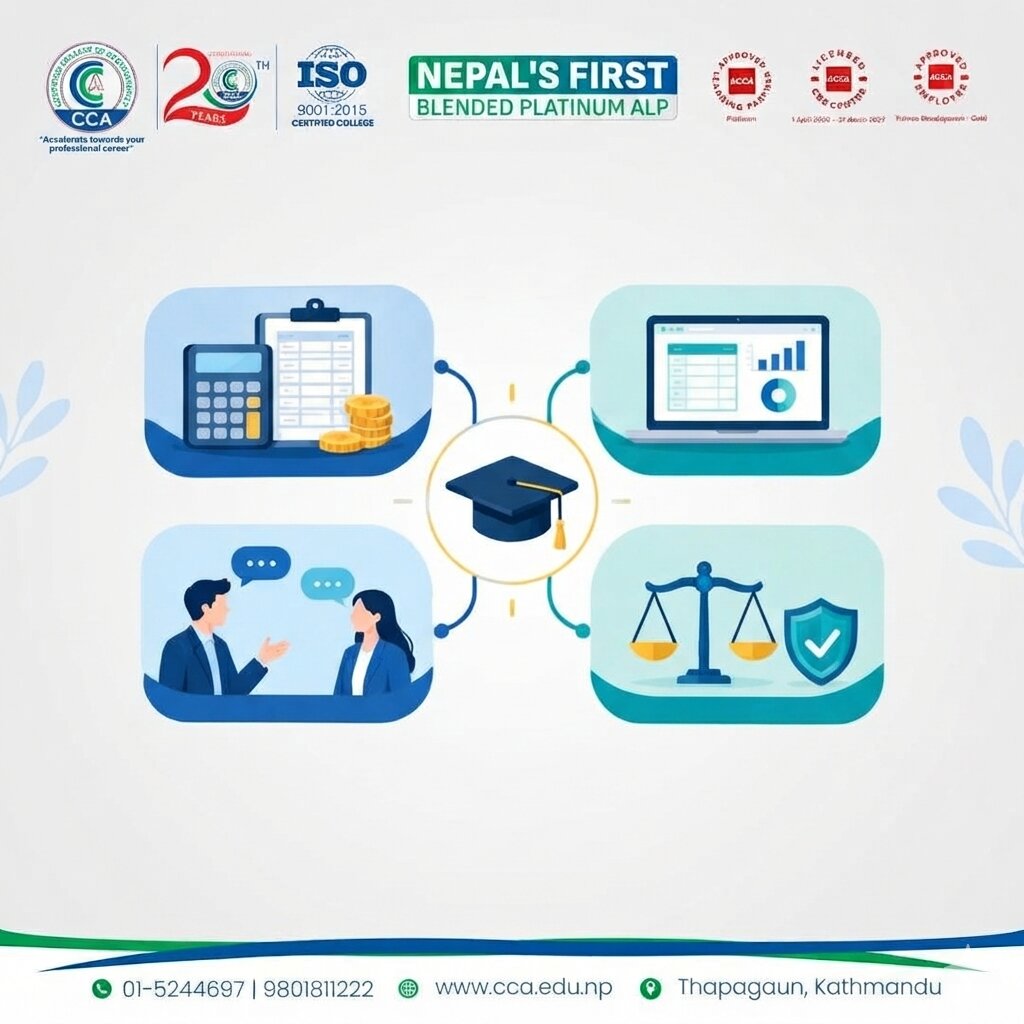
ACCA students can use the following checklist to prepare for employment:
Technical Skills
Financial accounting
Financial reporting
Financial analysis
Management accounting
Audit
Taxation
Risk and compliance
Digital Skills
Excel and spreadsheets
Accounting software
ERP systems
Data analysis
Financial modelling
Soft Skills
Communication
Teamwork
Presentation
Problem-solving
Time management
Adaptability
Professional Skills
Ethics
Professional judgment
Commercial awareness
Confidentiality
Attention to detail
How Can ACCA Graduates Demonstrate These Skills to Employers?
Build a Strong ACCA Graduate CV
Your CV should show more than the ACCA papers you have completed. Include relevant experience, software skills, projects, achievements and responsibilities.
For example, instead of simply writing “worked in accounting,” describe responsibilities such as reconciliations, reporting, budgeting or audit support.
Gain Practical Accounting Experience
Practical experience helps graduates apply their technical knowledge in real workplace situations.
ACCA’s Practical Experience Requirement involves 36 months of relevant supervised experience and nine performance objectives.
Create Evidence of Your Skills
Students can demonstrate their abilities through:
- Financial analysis projects
- Excel models
- Budgeting projects
- Case studies
- Data dashboards
- Presentations
- Internship work
Prepare for Finance Job Interviews
Interview preparation should cover both technical and professional skills. Graduates may encounter questions about accounting concepts, financial analysis, Excel, workplace situations, problem-solving and ethical decision-making.
Final Takeaway: Build Skills Alongside Your ACCA Qualification
ACCA provides a strong foundation in accounting and finance, but workplace readiness involves more than examination knowledge. Employers can look for a combination of technical accounting knowledge, financial analysis, communication, digital skills, business awareness, ethical judgment and practical experience.
For ACCA students in Nepal, developing these skills alongside the qualification can help them prepare for different accounting, audit, finance, risk and business roles. Practical experience is particularly important because it allows students to demonstrate how they apply their knowledge in real workplace situations.
Frequently Asked Questions About Skills Employers Expect From ACCA Graduates
What skills do companies look for in ACCA graduates?
Companies can look for technical accounting knowledge combined with financial analysis, communication, digital, problem-solving, teamwork and professional skills.
What technical skills should an ACCA graduate have?
Useful technical skills include financial accounting, financial reporting, financial analysis, management accounting, audit, taxation, risk and compliance.
Do ACCA graduates need Excel skills?
Excel can be valuable for accounting, reporting, analysis, budgeting and financial modelling. The required level depends on the specific job.
Is communication important for ACCA graduates?
Yes. Finance professionals often need to explain financial information to managers, clients, colleagues and other stakeholders. ACCA specifically includes communication and interpersonal skills in its professional skills development.
What software should ACCA students learn?
There is no single software package required for every ACCA job. Excel, accounting software, ERP systems and data-analysis tools can be useful depending on the role and employer.
Do employers value practical experience alongside ACCA?
Yes. Practical experience allows ACCA students and trainees to apply their knowledge in real workplace situations. ACCA’s PER requires relevant practical experience and performance objectives.
What skills are required for ACCA jobs in Nepal?
Depending on the role, employers may look for accounting and financial reporting knowledge, Excel, financial analysis, communication, audit or tax knowledge, software skills and practical experience.
Can ACCA graduates work in finance and business roles?
Yes. ACCA’s skills and experience can be relevant to a range of accounting and finance functions, including financial reporting, management accounting, audit, tax, financial management, risk and advisory work. The specific role depends on the employer, candidate’s experience and job requirements.